
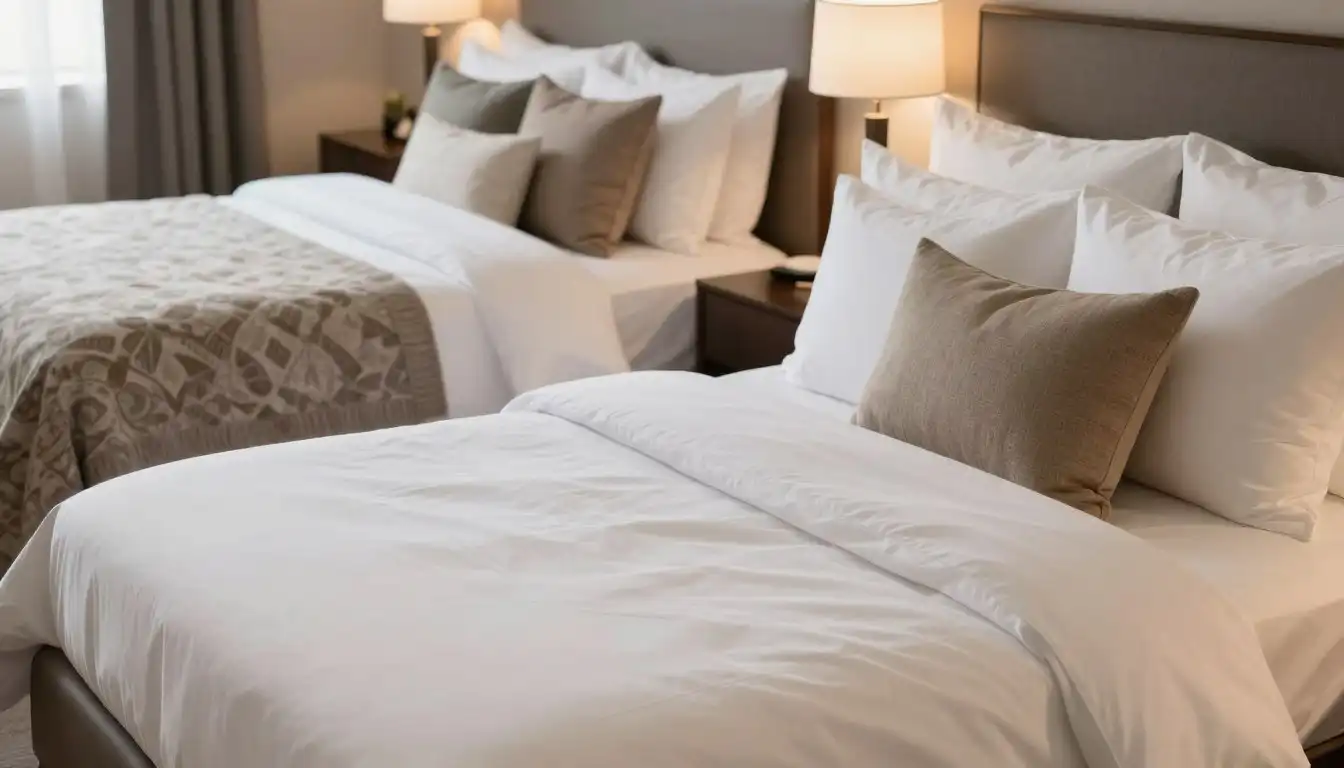
Hotel bedding vs home bedding is a topic many people wonder about, especially after a great night’s sleep in a luxury hotel. Ever wondered why you sleep so well in a suite? Many travelers notice their sleep gets better when they’re away. They start to wonder about the hotel bedding vs home bedding difference. It seems like a secret why hotel beds are so much better than their own.
The difference between hotel bedding vs home bedding comes down to material quality, layering, and maintenance.The secret is in the quality of materials and how well they’re kept. It’s not just the mattress. The layers of linens make a big difference. Knowing the difference between hotel and home bedding can help you make your bedroom feel the same.
A comparison of hotel bedding vs home bedding, highlighting how hotel bedding vs home bedding differs through layered comfort used in luxury hotels.Hotels make sure every sheet is clean and pressed perfectly. They use durable, soft fabrics that last through many washes. This way, they create a cozy spot for every guest.
Key Takeaways
- Luxury suites use high-quality, breathable fabrics for better temperature control.
- Professional laundry keeps linens feeling fresh and crisp for longer.
- Layering, like triple sheeting, adds comfort and looks good too.
- Regular care keeps pillows and duvets soft and supportive.
- Using premium materials can make your bedroom feel like a resort.
Understanding the Core Difference Between Hotel and Home Bedding
Hotel beds are famous for their comfort. But what makes them different from our home beds? The answer is in the materials, technologies, and design choices hotels use. These ensure a good night’s sleep for their guests.
One big difference is the mattresses. Hotels choose high-end mattresses for comfort and durability. These mattresses use premium materials for better support and pressure relief.
Key Components of Hotel Bedding:
| Component | Hotel Bedding | Home Bedding |
|---|---|---|
| Mattress Type | High-end, often hybrid or memory foam | Varies, often innerspring or basic memory foam |
| Thread Count | Typically high thread count for softness and durability | Can vary, sometimes lower thread count |
| Material | Often luxurious fabrics like Egyptian cotton | Ranges from basic cotton to luxury materials |
The table shows key differences between hotel and home bedding. Hotels choose better materials and construction for comfort.
Hotel bedding, including sheets and blankets, is also carefully picked. Hotels look for materials that are comfy, durable, and easy to clean.
Knowing these differences helps us choose better bedding for our homes. It can even improve our sleep quality.
The Science Behind Hotel Mattress Technologies
Hotel mattresses use advanced materials and designs to ensure a great night’s sleep. They are made to offer the best comfort and support. This is thanks to the latest technologies in the industry.
High-quality materials and designs are key to hotel mattresses’ comfort. Hotels choose the best mattresses for their guests.
Pocket Springs and Motion Isolation
Pocket springs are a big part of hotel mattresses. They provide exceptional support and motion isolation. Unlike regular coil springs, pocket springs are wrapped in fabric, allowing them to move freely.
This design greatly reduces motion transfer. So, if someone moves on one side of the bed, the other side won’t feel it.
Pocket springs also offer targeted support. Each spring can adjust to the body’s shape and weight. This helps keep the spine aligned and relieves pressure.
The Role of Memory Foam Layers
Many hotel mattresses also have memory foam layers for extra comfort. Memory foam molds to the body, giving pressure relief and customized support. It’s great for side sleepers, easing pressure on shoulders and hips.
The mix of pocket springs and memory foam in hotel mattresses is a synergistic approach to sleep technology. Pocket springs support and isolate motion, while memory foam relieves pressure and contours to the body. Together, they meet the needs of many sleepers.
Fabric Quality and the Thread Count Myth
Hotel quality bedding is all about the fabric and its weave. The softness and luxury of hotel beds come from the high-quality fabric used.
The fabric quality is not just about the material. It’s also about how it’s woven. Percale and sateen weaves are top choices for high-quality bedding.
Why Percale and Sateen Weaves Matter
Percale weave is known for its crisp and breathable texture. It’s a favorite for hotel bedding. Its simple weave makes it soft and smooth.
Sateen weave, on the other hand, feels soft and luxurious. Its weaving technique makes it smooth and lustrous.
| Weave Type | Characteristics | Feel |
|---|---|---|
| Percale | Crisp, breathable, simple weave | Soft and smooth |
| Sateen | Lustrous, soft, dense weave | Luxurious and smooth |
Debunking the High Thread Count Marketing
Thread count is often used to suggest quality. But, thread count is not the only quality measure. The fabric and weave can be more important.
Some makers use pilling or multi-ply threads to fake higher thread counts. This doesn’t always mean better quality or comfort.
When buying bedding, don’t just look at thread count. Consider the fabric, weave, and construction too.
Ergonomics and the Pursuit of Medium Firmness
Hotel beds are designed with ergonomics in mind, focusing on medium firmness. This is key to their comfort and appeal. Hotels aim to create a sleep space that suits everyone, and ergonomics is central to this goal.
Ergonomic design in hotel beds is more than looks. It’s about pressure relief for every sleeping position. Whether you sleep on your side, back, or stomach, the bed must support and comfort you for a good night’s sleep.
Pressure Relief for Every Sleeping Position
A bed that’s too firm can hurt side sleepers’ shoulders and hips. On the other hand, a bed that’s too soft can strain back and stomach sleepers. Medium firmness finds the perfect balance, supporting all sleeping positions.
Hotels use mattresses with special features like adjustable firmness and layered designs. These can be customized to meet different sleep needs.
Why Hotels Choose Universal Comfort Profiles
Hotels pick universal comfort profiles for their beds to meet a wide range of guests. Medium firmness beds suit most guests, ensuring a good night’s sleep for many.
Studies show medium-firm mattresses reduce back pain and improve sleep quality. So, hotels invest in best bedding for sleep that follows ergonomic design and universal comfort principles.
By focusing on ergonomics and medium firmness, hotels offer a sleep experience that’s both comfortable and supportive. This boosts guest satisfaction.
Durability Standards for Commercial Use
Hotel mattresses are built to last, thanks to their design and materials. They must handle daily use and keep their comfort and support. This is different from home mattresses, which see less wear and tear.
When comparing hotel bedding vs home bedding, the difference in comfort becomes immediately noticeable.
Hotel mattresses use heavy-duty materials and construction. This ensures they stay comfy and supportive, even after many guests. They have high-density foams and strong coil systems for this purpose.
Materials Built to Withstand Daily Turnover
Hotel mattresses are made with materials that can handle daily use. They have durable fabrics and high-quality foams. These materials keep their shape and support over time.
Many hotel mattresses also have breathable materials. These help control temperature and prevent moisture buildup. This keeps guests comfortable and extends the mattress’s life.
- High-density foam for long-lasting support
- Durable coil systems for consistent comfort
- Breathable materials for temperature regulation
The Lifespan of Hotel vs Home Mattresses
The debate between hotel bedding vs home bedding often comes down to material and layering.
Hotel mattresses have a shorter lifespan than home mattresses. They are replaced every 5 to 7 years due to heavy use. Home mattresses, used by fewer people, can last 7 to 10 years.
When comparing hotel mattress vs home mattress, durability and lifespan are key. The materials and intended use greatly affect these factors. Knowing this helps when choosing a mattress for your home.The debate between hotel bedding vs home bedding often focuses on material quality and layering techniques.
Cleaning Protocols and Hygiene Maintenance
Hotels work hard to keep their bedding clean and fresh. They use strict cleaning rules to make sure every guest has a comfortable stay. This focus on cleanliness is key to a hotel’s success.
Hotels use special laundry methods to keep their bedding clean. Unlike home washing, hotel linen is washed in big machines at high temperatures. This ensures the bedding is always ready for guests.
Industrial Laundering Processes
Hotels wash their bedding in hot water to kill germs and dust mites. This is essential for keeping hotel quality bedding clean. They also use special cleaners that remove stains and odors without damaging the fabric.
- High-temperature washing to eliminate pathogens
- Use of commercial-grade detergents for effective stain removal
- Specialized drying processes to prevent fabric wear
Keeping Bedding Fresh and Allergen-Free
Hotels also have other ways to keep bedding fresh and free from allergens. They change linens often, dry them well, and use mattress protectors. This helps prevent dust mites and stains.
To get the best bedding for sleep, hotels also keep their rooms clean. They clean rooms every day, deep clean mattresses, and wash and dry all bedding thoroughly. This ensures a clean sleep environment for guests.
Understanding hotel bedding vs home bedding helps you recreate a luxury sleep experience at home.
By learning about these cleaning methods, we can make our home bedding better. We can make it more like the hotel quality bedding we enjoy during our stays.When comparing hotel bedding vs home bedding, the difference in comfort becomes obvious.
One key factor in hotel bedding vs home bedding is how frequently the materials are maintained and replaced.
The Layering Strategy of Professional Bed Making
To make your bed feel like a hotel’s, start with the layering strategy. Hotel beds are known for their luxury. This is thanks to the careful layering of different bedding parts.
Layering isn’t just about throwing on sheets and blankets. It’s about mixing elements thoughtfully. A well-layered bed is not only cozy but also supports a good night’s sleep.
Mattress Toppers and Pads
Mattress toppers and pads are key in layering. They add comfort to your bed. Toppers give extra cushioning, while pads protect the mattress and add comfort. Choosing the right material, like memory foam or down alternative, really matters.
For example, a memory foam topper relieves pressure and supports. A mattress pad, on the other hand, guards against spills and stains. This helps your mattress last longer.
Creating the Perfect Bed Skirt and Duvet Setup
The bed skirt and duvet setup are also important. A bed skirt makes your bed look better and hides the space under it. Choosing the right duvet fill and material is key for warmth and comfort.
A good duvet is the heart of a cozy bed, providing warmth and loft. A breathable bed skirt makes the bed even more inviting and comfy.
Comparing Hotel Mattress vs Home Mattress Construction
Hotel mattresses are made with a lot of care and special materials. This makes them different from home mattresses. They offer comfort and last a long time, which is why hotels use them.
Hotel mattresses have strong support cores and edges. This is because they get used a lot.
Support Cores and Edge Reinforcement
Hotel mattresses use dense foam or coils for support. They also have strong edges to keep the mattress firm. This makes the mattress last longer and feel bigger.
Home mattresses don’t need to be as tough. They might use softer materials. Their edges also don’t need to be as strong because they’re not used as much.
| Feature | Hotel Mattress | Home Mattress |
|---|---|---|
| Support Core | High-density foam or coil system | Varied, often less dense materials |
| Edge Reinforcement | Robust edge support for durability | Less emphasis on edge reinforcement |
Breathability and Temperature Regulation
Hotel mattresses also focus on keeping you cool. They use materials that let air flow and help keep the mattress cool.
Breathable materials like natural fibers and special foams are used. Home mattresses might not focus as much on keeping you cool.
Hotel mattresses are built to last, with a focus on support and keeping you cool. Knowing these differences can help you choose the right mattress for your home.
Selecting the Best Bedding for Sleep Quality
Getting good sleep starts with the right bedding. When comparing hotel bedding vs home bedding, the bedding market offers a wide range of options for different sleep styles and needs.
Choosing the right bedding means thinking about the fibers used. In hotel bedding vs home bedding, the choice between natural fibers and synthetic blends plays a key role, as each has its own advantages and downsides.
Natural Fibers Versus Synthetic Blends
Natural fibers like cotton, linen, and bamboo are breathable and comfy. They let air flow, helping keep your body temperature right during sleep. Synthetic blends, though, are durable and simple to care for. They feel like natural fibers but might not breathe as well.
| Fiber Type | Breathability | Durability | Maintenance |
|---|---|---|---|
| Natural Fibers | High | Moderate | May require ironing |
| Synthetic Blends | Moderate | High | Easy to wash and dry |
Choosing between natural fibers and synthetic blends depends on what you prefer and need for sleep. Natural fibers are great for comfort and breathability. But, if you want something durable and easy to clean, synthetic blends might be better.
Choosing Pillows That Match Your Sleep Style
Pillows are key for good sleep, supporting your head and neck. The right pillow can greatly improve your sleep.
Think about your sleep position when picking a pillow. Side sleepers need a soft pillow for their head and neck. Back sleepers should choose a medium-firm pillow for spine alignment. Stomach sleepers do best with a thin, firm pillow to keep their head straight.
Many people researching hotel bedding vs home bedding want to achieve the same comfort level at home.

By picking the right bedding and pillows, you can greatly improve your sleep. Whether you like natural fibers or synthetic blends, find what works best for you and your sleep needs.
How to Make Your Bed Feel Like a Hotel
Turning your bedroom into a cozy retreat, like a fancy hotel, is possible with a few simple changes. The secret to a hotel-like bed at home is knowing the difference between hotel and home bedding.
Hotel beds are famous for their comfort and luxury. Many homeowners wonder how to get a similar feel at home. The answer is in the quality of bedding and how it’s arranged.
Upgrading Your Current Mattress Setup
Hotel beds stand out because of their mattresses. Hotels choose high-quality mattresses for comfort and support for all types of sleepers.
To improve your mattress, think about these steps:
- Check if your mattress is comfy and supportive. If not, get a new one that offers better support and comfort.
- Get a mattress topper for extra comfort. Memory foam or latex toppers are great for relieving pressure.
Looking at different mattress topper materials can help you choose:
| Mattress Topper Material | Pressure Relief | Durability |
|---|---|---|
| Memory Foam | Excellent | High |
| Latex | Good | Very High |
| Down/Feather | Variable | Moderate |
Investing in High-Quality Linens and Toppers
Comfortable mattresses are just the start. High-quality linens and toppers are also key for a hotel-like bed. Hotels use luxurious fabrics that are soft and breathable.
To make your bed more comfortable, consider these:
- High-thread-count sheets from materials like Egyptian cotton or bamboo for their softness and durability.
- A duvet or comforter that’s warm but light, filled with down or synthetic materials.
By focusing on upgrading your mattress and choosing high-quality linens and toppers, you can greatly improve your bed’s comfort. This will make it feel more like a hotel bed.
Common Mistakes When Buying Home Bedding
Shopping for home bedding can be tricky. People often overlook how breathable the fabric is or how supportive the pillows are. This can lead to poor sleep quality and discomfort.
Choosing the right bedding is key for a good night’s sleep. Many focus on looks or price, not the features that really matter. These features are what make a big difference in how well you sleep.
Ignoring Fabric Breathability
Breathability is essential for comfortable sleep. In hotel bedding vs home bedding, breathable fabrics help regulate temperature and keep you cool at night.
Natural fibers like cotton and linen are great for breathing. On the other hand, synthetic materials can trap heat and moisture. This can make you uncomfortable at night.
| Fabric Type | Breathability | Moisture Wicking |
|---|---|---|
| Cotton | High | Moderate |
| Linen | Very High | High |
| Polyester | Low | Moderate |
Overlooking the Importance of Pillow Support
Pillow support is often ignored when buying bedding. The right pillow supports your neck and head. This keeps your spine aligned and prevents strain.
Choosing the right pillow loft and firmness is key. A pillow that’s too flat or too thick can cause discomfort. It can also affect your sleep quality.
Knowing these common mistakes in hotel bedding vs home bedding can help you make better choices and improve your sleep quality and overall comfort.
Conclusion
Knowing what makes hotel beds so comfy is key to getting that same feel at home. When comparing hotel bedding vs home bedding, the main difference lies in the quality of materials, design, and maintenance. Hotel beds use advanced mattress technology, premium fabrics, and careful layering to achieve superior comfort.
To get the best bedding for sleep, it helps to understand hotel bedding vs home bedding standards. This includes using durable materials, ergonomic design, and strict cleaning practices. A high-quality mattress, breathable linens, and proper layering can significantly improve your sleep.
By understanding hotel bedding vs home bedding, you can make smarter choices for your home. This leads to better sleep, improved comfort, and overall well-being.
FAQ
Why are hotel beds more comfortable than standard home beds?
Hotel beds are more comfortable because of high-quality materials and expert layering techniques. Luxury hotels often use medium-firm mattresses designed to suit most sleeping styles. They also combine toppers, duvets, and multiple pillows to create a soft yet supportive sleep experience.
What is the main difference between hotel and home mattress construction?
The main difference between hotel bedding vs home bedding is durability and design. Hotel mattresses are built with stronger edge support and dense materials to withstand daily use, while home mattresses are usually tailored to individual preferences.
Are high thread count sheets always the best bedding for sleep?
Not always. While high thread count sheets can feel soft, they may reduce breathability. Hotels typically use 300 to 400 thread count sheets, which provide a better balance between comfort and airflow for quality sleep.
How can I make my bed feel like a hotel on a budget?
To recreate hotel bedding vs home bedding comfort at home, start with a mattress topper, use breathable cotton sheets, and apply the triple sheeting method. Adding supportive pillows can also improve overall sleep quality.
Why do hotels use hybrid mattresses with foam and springs?
Hotels prefer hybrid mattresses because they combine the support of springs with the pressure relief of memory foam. This creates a balanced feel that works well for most sleepers without excessive sinking.
What are the best materials for hotel-quality bedding?
The best materials for hotel bedding vs home bedding include natural fibers like Egyptian cotton, Supima cotton, and linen. These fabrics are breathable, durable, and become softer with regular use.
Is a hotel mattress better for back pain than a home mattress?
In many cases, hotel mattresses provide better support for back pain because they are typically medium-firm and designed for spinal alignment. This makes them more supportive compared to overly soft home mattresses.
What is bedding and why is it important for sleep?
Bedding includes items like sheets, pillows, and duvets that affect comfort and sleep quality. According to
bedding materials, the type of bedding used can influence temperature regulation and restfulness.
What type of bedding is best for better sleep?
The best bedding depends on comfort, breathability, and material quality. Research from the
Sleep Foundation shows that breathable fabrics like cotton and linen help improve sleep quality.